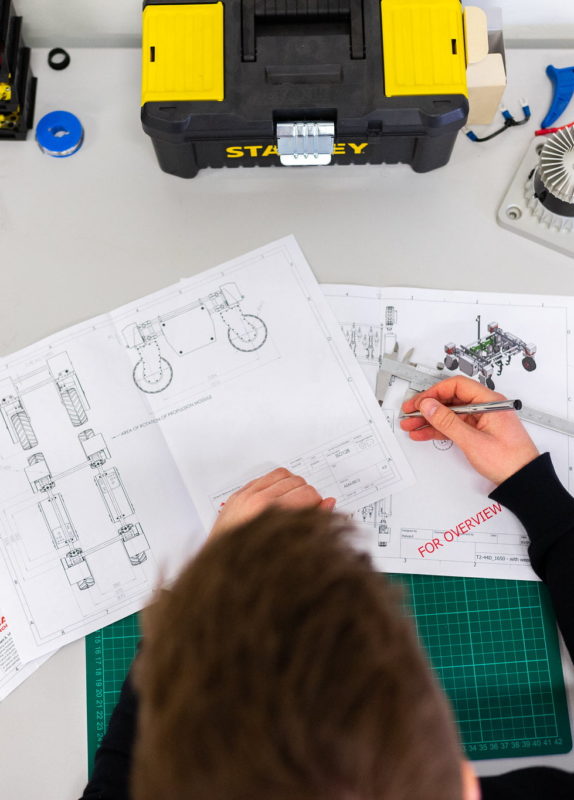
Bachelor of Electrical and Electronic Engineering​

Electrical and Electronic Engineering

Accelerated engineering. Global opportunities.

ASU London, a world-class blend of UK and US engineering excellence.

Course Name

Electrical and Electronic Engineering

UCAS Code

TL06

Qualification

Bachelor of Electrical and Electronic Engineering​ BEng (Hons)

Study Mode

On campus

Course starts

September 2026

Fees

UK and Ireland £9,275 per year International £23,600 per year

Duration

3 years

Design, build, and innovate at ASU London — where UK and US engineering excellence meet. Earn a bachelor’s and master’s in just four years and launch your global electrical and electronic engineering career. More choices, bigger opportunities with post-study work options for you to begin your career, including up to three-year visa options in the US.

Innovate, build, and lead in Electrical and Electronic Engineering

Electrical and Electronic Engineering (EEE) is at the heart of the systems that power our world and connect our societies, from smart grids and renewable energy to AI-enabled devices, communications networks and future data centres. This degree programme equips you with the knowledge, creativity and professional skills to design, build and manage the technologies that underpin a sustainable, intelligent future.

Complete your undergraduate at ASU London then head to Arizona State University to complete your master’s degree. Through ASU London’s partnership with Arizona State University you’ll gain access to a number of specialisations form the one of the best engineering schools in the world, allowing you to complete both qualifications in just four years.
Overview Section Image

Why choose ASU London?

Looking for an accelerated way to earn two powerful degrees and launch your international career? ASU London offers students a UK-accredited degree enhanced by the globally recognised curriculum of Arizona State University, ranked the #1 most innovative university in the US for 11 consecutive years (2016-2026) by U.S. News & World Report, with US master’s degree pathways integrated directly into your programme.

Earn two degrees in four years

Accelerate your future and graduate with both a bachelor's and a master's degree in just 4 years, saving time and expense. And, your pathway to the US is guaranteed if you meet entry requirements.

Double the countries. Double the connections. Double your career opportunities.

Study across both the UK and US and double your career connections and prospects. If you want global opportunities for a career, this is your perfect place to start.

Study like a “professional in training”

With practical, real-world learning and problem-solving to gain valuable professional skills, every ASU London degree is inspired by the university ranked #1 in the US for innovation by U.S. News & World Report for 11 years running.

An innovative degree designed for the future

Earn a degree shaped by innovation, technology, and AI, designed to better prepare you for the careers of today and the future.

Unrivalled international student experience

Study in London. Study in the US. Earn two degrees and double your experience in two of the world’s most exciting places to learn and live.

Say hello to a ready-made employer network

Earn a master’s from Arizona State University and tap into over one million alumni, 650+ global industry partners - including EY, Amazon, Apple, Intel, Microsoft, NVIDIA, Boeing, and Goldman Sachs - plus strong UK collaborations for global career opportunities.

Careers and opportunities

Graduates from Bachelor of Engineering (BEng) in Electrical and Electronic Engineering can progress to Arizona State University and complete a Masters in Electrical Engineering, MS.

Explore why Arizona State University’s master’s degrees are amongst the world’s best (link to ASU Fulton School of Engineering home page Ira A. Fulton Schools of Engineering | Arizona State University)

If you choose not to study your master’s degree, once you graduate from ASU London with a Bachelor’s in Electrical and Electronic Engineering, you’ll be well-equipped to pursue roles in rapidly evolving sectors such as renewable energy, transport, communications and smart infrastructure. 

Potential careers available to graduates:

Power Systems Pathway

  • Power Systems Engineer (generation, transmission & distribution)
  • Renewable Energy Engineer (wind, solar, hydro, storage)
  • Smart Grid/Infrastructure Engineer
  • Electrical Design Engineer (plants, substations, HV/LV systems)
  • Energy Analyst / Grid Integration Specialist

Communication Systems Pathway

  • RF/Microwave Engineer (antennas, wireless, satellite)
  • Signal Processing Engineer (telecoms, radar, imaging)
  • Embedded Systems Engineer (IoT, robotics, automotive)
  • Telecommunications / Network Engineer
  • Optoelectronics / Photonics Engineer (fibre optics, laser comms)
For more information about this Bachelor of Engineering (BEng) in Electrical and Electronic Engineering

What you'll study

In your first year, you’ll build a solid grounding in circuits, devices, control and dynamic systems while developing key engineering skills like teamwork, problem-solving and communication.
Learning combines hands-on labs, makerspace projects and simulations, giving you practical experience in designing, testing and analysing electronic and electrical systems.
By the end of the year, you’ll be ready to choose your pathway and tackle more specialised topics. You’ll start your journey as a student engineer learning professional skills that are essential to becoming an effective Engineer.

Core Modules

  • Empowering Engineering
  • Simulation
  • Smart Systems 
  • Engineering Leadership & Impact
In year two, you consolidate core EEE knowledge and start specialising. You’ll explore advanced topics in circuits, signals, power, and communications, and apply data analysis and machine learning to engineering problems.
You can choose between the Power Systems pathway (energy networks, power electronics, smart grids) or Communication Systems pathway (signals, antennas, photonics, networks). Hands-on labs, projects and simulations help you design, test and validate real-world engineering solutions.

Core Modules

  • Research and Innovation
  • Ecological Structures
  • Machine Learning

Power Systems Recommended Modules

  • Power Electronics
  • Power Systems

Communications Systems Recommended Modules

  • Field and Waves
  • Signal Processing
Year three focuses on complex systems and professional skills. You’ll complete a capstone project integrating your technical expertise with leadership, problem-solving, and innovation.
Depending on your pathway, you’ll work on advanced energy systems or communication technologies, gaining experience with industry-standard tools and methods. By the end of the year, you’ll have a strong portfolio, ready for employment, further study, or professional registration (IEng/CEng).

Core Modules

  • Global Design Engineering Individual Project
  • Applied Artificial Intelligence

Power Systems Recommended Modules

  • Advanced Power Electronics
  • Energy Networks
  • Power Plants
  • Renewable Energy

Communications Systems Recommended Modules

  • Communication Systems and Networks 
  • Antennas
  • Computer-Controlled Systems
  • Optoelectronics
Please note all modules are subject to change based on requirements from industry and employers.
For further information about this course, get in touch with us today.
No Maths A-Level? No problem

Entry requirements

The following criteria is intended as a guide to help you gauge if ASU London is for you:
If studying A Levels, IB, BTEC (or any post 16 education) you’ll be on track for approximately 128 UCAS points or equivalent
GCSE Maths grade C/4 (or equivalent Level 2 qualification)
For working adult students or others who may not meet these requirements, you may be invited to online interview.

International students

You can view our full list of country specific entry requirements on our Entry requirements page.
English language requirements: IELTS: 6.0 overall, with at least 5.5 in each component area. If you don’t meet the English language requirements, you can achieve the level you need by successfully completing a pre-sessional English programme before you start your course.
For more information on our approved English language tests visit our English language requirements page.
For more information on student visas and work rights, please visit our student visas page.
Study Modes Section Image

How you'll learn: Like a professional in training

As soon as you start, you’ll be on a fast-track to complete your bachelor’s degree in Electrical and Electronic Engineering in four years.

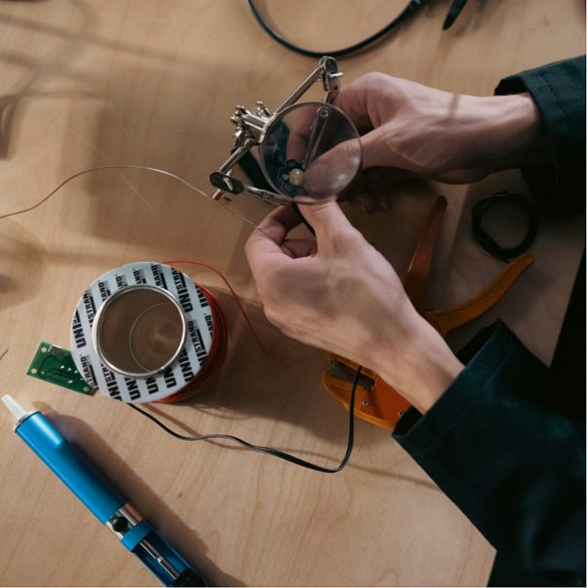
  • You’ll learn through a mix of hands-on labs, makerspace projects, simulations, and problem-based learning.
  • Group projects let you tackle real-world engineering challenges, developing teamwork, problem-solving and communication skills while designing, testing, and analysing circuits, sensors, actuators, and systems.
  • Maths and digital skills are taught in context, helping you apply them confidently across all areas of electronic and electrical engineering. Assessments mirror industry practice, preparing you for the challenges of professional engineering.

Your assessments

To support your development as an engineer, you’ll be assessed in a variety of ways that reflect both professional practice and technical understanding. 

These include: Individual and group assessments such as reports, presentations, vivas, tests, log books, and portfolios. 

This mix of methods gives you the chance to demonstrate your skills in different formats and ensures fair opportunities for all learning styles. 

Group work is an important part of the programme, and a clear group working policy is in place to make sure contributions are consistent and fairly recognised.
Working with Industry Section Image

Industry experience that powers your career

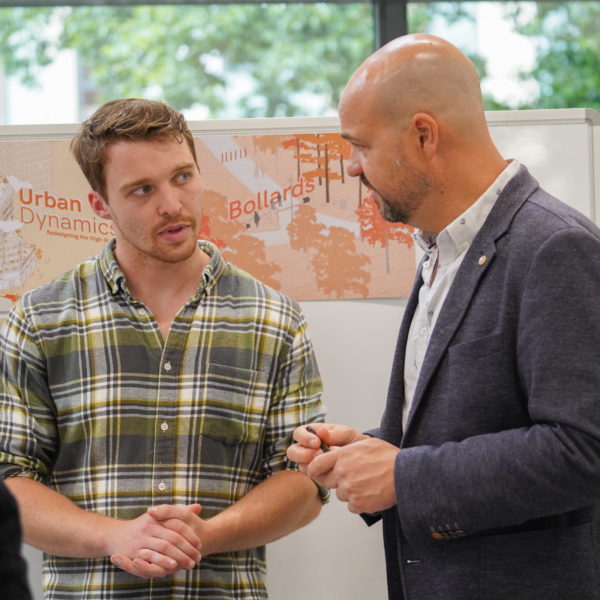
At ASU London, industry collaboration is built into your Electronic and Electrical Engineering degree. Co-designed with employers and guided by our Industrial Advisory Group, the programme is designed to keep you aligned with the latest developments in power, energy, communications, and digital technologies.
From day one, you’ll work on real projects with industry partners, gain mentorship from professionals, and develop the technical, communications and leadership skills that employers demand. By graduation, you’ll have the opportunity to step into roles across renewable energy, smart grids, telecommunications, and digital infrastructure — or launch your own innovation.
Industry
We’ve partnered with Kaplan

Teaching contact hours

As an undergraduate student, you will study modules totalling 180 credits each academic year. A typical 15 credit module requires a total of 150 hours study. This is made up of teaching contact hours, guided and independent study.
Working with industry Section Image

Who you will learn from

ASU London bachelor’s degree programmes are shaped in collaboration with Arizona State University. This includes academics and experts in the US and the UK.  The master’s degree is developed by Arizona State University’s highly-ranked Ira. A School of Engineering.

Our founder and partner, Arizona State University is at the forefront nationally and internationally in advancing research and discovery with:

  • More than 6,000 faculty members 
  • 5 Nobel laureates 
  • 11 Pulitzer Prize winners 
  • 23 National Academy of Sciences members and awards 
  • 11 National Academy of Engineering members

ASU London facilities and student life

Your student experience and support team (known as the Student Hub) provide several support services

Student Hub Services

Accommodation guidance
Appeals, complaints and misconduct
Finance guidance
International student support

Student hub services

Welcome and induction
On-campus events
Signposting to job opportunities

Student hub services

Wellbeing
Counselling and mental health
Disability support/ learning success
Student feedback

Fees and funding

UK Fees at ASU London
Bachelor of Engineering
UK & Ireland, full-time – £9,275 per year
International, full-time – £23,600 per year

US Fees at Arizona State University
Master’s degree with specialisations

These are the fees for the 2026/27 academic year. Fees for future years may be subject to an inflationary increase. For more information about how our fees are set, please refer to our fees policy online.
Tuition fees cover the cost of your teaching, assessments, facilities and support services. There may be additional costs not covered by this fee such as re-assessments should you need them. Students will be required to have their own materials such as laptop, scientific calculator and stationery.
Discounts, loans, scholarships We offer a range of a range of scholarships and discounts. For more information, contact our enrolment advisor and enquire now.

FAQs

You’ll graduate with a UK degree Bachelor of Engineering in Electronic and Electrical Engineering from ASU London. Students who choose the 3+1 pathway will also earn a US postgraduate Master’s degree from Arizona State University, if they meet the master’s degree entry requirements.
Yes. Both ASU London and Arizona State University degrees are internationally recognized, giving you credentials that open doors around the world.
You can complete three years in London for your undergraduate degree and your final year at Arizona State University in the US for your postgraduate degree, graduating with two internationally recognised degrees in four years. If you wish to study for more than one year in the US, you can apply to study additional specialisations at Arizona State University.
Yes.  If you wish to study for more than one year in the US, you can apply to study additional specialisations at Arizona State University
Students studying the Bachelor of Engineering at ASU London will require a 2:2 honours degree to be accepted into the master’s degrees at Arizona State University.
Graduates enter fields such renewable energy, smart grids, telecommunications, and digital infrastructure.  You can choose between specialising in one of two pathways: Power systems (focusing on energy networks, power electronics, and smart grids) or communication systems (exploring fields, signals, antennas, and advanced networks).
International students who complete their final year at Arizona State University in the US on an F-1 visa may be eligible for OPT, including a STEM-OPT extension of up to 24 months. As always US study visa criteria and post-study work rights are subject to change at the discretion of the US Government.

In relation only to UK work rights, currently ASU London’s UKVI student sponsor license does not allow our sponsored international students to work in the UK, either during their studies or after they graduate. 

This does not relate to post-study work rights in the US if you choose to continue your studies and complete your master’s degree at Arizona State University.

We are working towards full UKVI student sponsor status and will keep international applicants informed on progress. It is subject to ASU London continued UKVI compliance and subsequent approval from the UKVI. Once ASU London has UKVI full sponsor status:

  • All subsequently enrolled ASU London sponsored international students will be able to work in UK during their ASU London studies. 
  • On successful course completion, all currently registered ASU London sponsored international students will be able to apply to UKVI for a Graduate Visa to allow them up to 18-months post study work in the UK

Your enrolment advisor will keep you informed as to progress on this important information during your application process.

For more information on student visas and work rights, please visit our student visas page.

For all details relating to student visas, visit our dedicated student visas page and refer to the question above as it relates to the UK, not the US.

Open day

Join the next ASU London Open Day to learn more about the Engineering with Artificial Intelligence degree programme.

How to apply

Our applications are open now. You can apply to us directly or, if you are a UK or Ireland student, through UCAS.
Step 01
 If you have any questions, feel free to enquire now for more information
Step 02
If you’re ready to begin your application, you can start here at apply.asu-london.ac.uk or via UCAS. You’ll need to create an account and the application process takes approximately 15 minutes.
Step 03
Our admissions team will then review your application and be in touch within two working days
Step 04
As part of your application process, some students may be invited to meet online, if you are an international student,  don’t meet our standard entry requirements, or are applying with work experience instead of academic qualifications.
For further support or more information about your course, get in touch with us today.